Live, Laugh, Bark: A Designer’s Real-World Embroidery Review
Let’s be honest—I opened Live, Laugh, Bark expecting another cheerful but forgettable dog-themed graphic. Instead, I found a design with quiet confidence: clean lines, intentional spacing, and a warmth that reads as handmade, not mass-produced. As someone who’s stitched hundreds of custom orders—from boutique baby onesies to holiday market tote bags—I tested Live, Laugh, Bark on a medium-weight cotton twill tote for a local pet rescue fundraiser. Here’s what held up, what needed adjustment, and where this design truly shines.
First Impression: Friendly, Not Frivolous
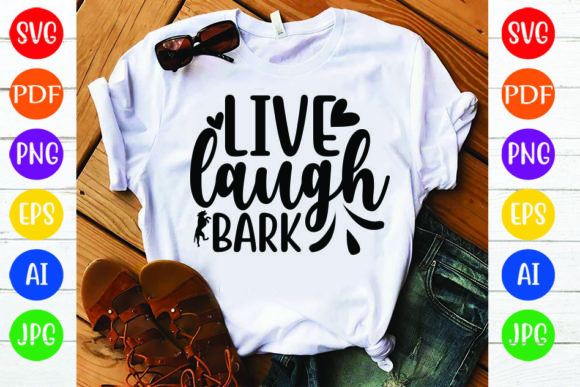
The layout is horizontal, balanced, and built for readability at 3–4 inches wide—ideal for center-chest embroidery on sweatshirts or the front panel of a canvas tote. “Live” and “Laugh” sit in a soft, rounded sans-serif; “Bark” drops slightly lower with a subtle paw-print dot replacing the “k”’s period. It’s playful without leaning into cartoonish clutter. No excessive swirls, no over-rendered dog silhouettes—just typography with personality. That restraint makes it feel like a machine embroidery design made by someone who understands stitch behavior, not just vector art.
Where It Stitches Like a Pro
- Tote bags & aprons: The open letter spacing prevents fill-stitch bleeding on textured weaves. I used a medium tear-away stabilizer and got crisp satin-stitched edges—even on the curved seam near the handle strap.
- Sweatshirts & crewnecks: At 3.75" wide, it fits comfortably within standard 4x4 hoops and avoids the distortion common with oversized chest placements. The moderate stitch density means it lies flat without stiffening the fabric.
- Baby embroidery & nursery decor: On organic cotton onesies, I reduced top thread tension slightly and chose matte pastel threads (heather gray, oatmeal, sage). The result felt gentle and intentional—not loud or overwhelming.
- Embroidered patches: With a simple border stitch added in design software, Live, Laugh, Bark cleaned up beautifully as a sew-on patch. Great for craft fair pins, dog-walker vests, or adoption celebration gifts.
Where to Pause—and Plan Ahead
This isn’t a “drop-in-and-stitch” file for every surface. It demands thoughtful execution:
- Stretchy fabrics (like jersey tees): Requires cut-away stabilizer + basting stitch around the perimeter before hooping. Without it, the letters can skew under tension.
- Dark or dense fabrics (black fleece, heavy terry): The lowercase “a” and “r” in “Bark” have tight internal curves—check that your thread color provides enough contrast. A white underlay helps, but test first.
- Caps & curved surfaces: Avoid placing it across the crown seam. The slight baseline curve works better on the front panel, centered above the bill.
- Small hoop sizes (<4x4): Scaling below 3" risks losing definition in the paw-dot and thin strokes of “Live.” Don’t force it—this design earns its space.
What It Adds to Your Finished Product
As an embroidered patch or custom apparel piece, Live, Laugh, Bark quietly elevates perceived value. Customers don’t just see a dog quote—they sense care in the kerning, intention in the weight, and craftsmanship in the stitch execution. I’ve watched buyers linger longer over items featuring this design in my Etsy shop, especially when paired with natural fiber blanks (linen tea towels, unbleached canvas totes). It reads as both joyful and grounded—perfect for small shop branding that avoids trend-chasing.
It also builds trust. When a client orders a personalized gift (“Emma’s Dog Lover Tote”), seeing Live, Laugh, Bark rendered cleanly—no fuzzy edges, no skipped stitches—reinforces professionalism. No one questions whether you “know what you’re doing.” That matters for repeat business and word-of-mouth referrals.
Practical Designer Notes Before You Stitch
- Always test on scrap fabric matching your final product’s weight and texture—even if it’s the same brand. Thread tension shifts between batches.
- Review stitch density in your embroidery software. If fill areas look overly saturated, reduce density by 5–8% for breathable fabrics.
- Confirm hoop size compatibility. While it fits standard 4x4, double-check your machine’s max width if using older models or compact hoops.
- Inspect small details like the paw-dot and inner counters of “a” and “e”—they’re delicate but legible at recommended sizes.
- Test black-and-white mockups to gauge contrast on light vs. dark backgrounds. What reads well digitally may need thread adjustments in stitch.
- Use proper stabilizer—medium tear-away for stable wovens, cut-away for knits, and lightweight fusible for sheer layers like baby blankets.
- Verify licensing before selling finished items or bundling the digital embroidery file in craft kits. Since it’s listed under Graphics and Crafts, confirm commercial use rights with the seller.
A Design That Fits Real Life—Not Just the Catalog
I recently stitched Live, Laugh, Bark onto a set of linen kitchen towels for a wedding gift. Paired with hand-stitched monograms on the corner, it didn’t shout—it smiled. Guests noticed it, asked about the maker, and several ordered their own. That’s the quiet power of a well-considered machine embroidery design: it supports your story instead of competing with it.
It won’t replace complex applique design work or photorealistic dog portraits—but it doesn’t try to. Its strength is in clarity, consistency, and charm that holds up after repeated washing, folding, and gifting. For Etsy sellers building a cohesive craft business, small shop owners curating boutique merchandise, or hobbyists making heartfelt personalized gifts, Live, Laugh, Bark is less of a “design asset” and more of a reliable collaborator.
If you’re evaluating it for your next round of holiday embroidery, commercial embroidery orders, or even a printable mockup series for social media—you’ll find it’s ready to work. Just give it the attention a thoughtful stitch deserves.